
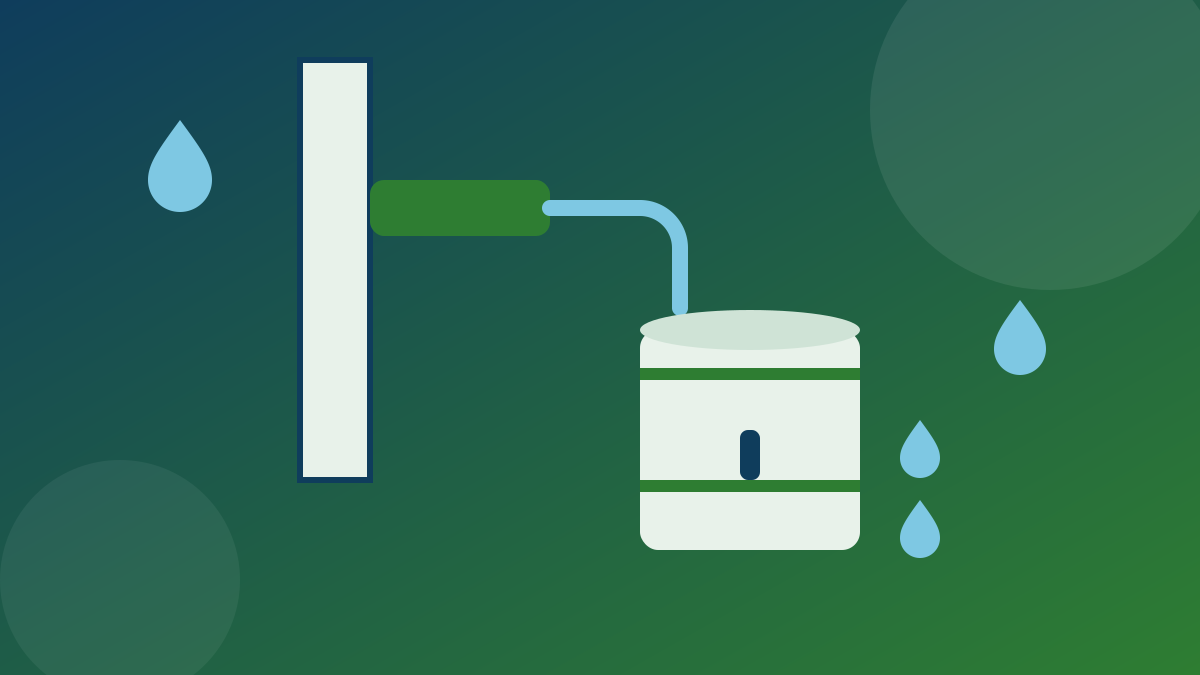
Best Rain Barrel Diverter: 5 Types Compared (And Which One to Buy)
The best rain barrel diverter for most homes is a flexible downspout diverter kit, usually $15 to $30. It fits a standard 2×3 or 3×4 inch downspout, sends roof water into the barrel, and sends overflow back down the downspout when the barrel is full. We ranked the five common types on fit, overflow handling, ease of fitting, and price.
All water in this guide is for non-potable use only: watering ornamental garden beds and lawns, and outdoor cleaning. Rain barrel water is not drinking water. If you have not bought a barrel yet, run the numbers on the rain barrel calculator first, then pick a diverter to match.
Quick picks
- Best overall: flexible downspout diverter kit — fits most downspouts, handles overflow itself.
- Best for tight budgets: simple elbow diverter — cheapest, but you must add an overflow hose.
- Best for cold climates: diverter with a winter shut-off — drain it before the first freeze.
- Best looking: in-line diverter that hides inside the downspout — neat, but harder to clean.
The 5 Best Rain Barrel Diverters, Ranked
| Diverter | Price | Fits | Overflow handling | Best for |
|---|---|---|---|---|
| Flexible downspout kit | $15–$30 | 2×3 and 3×4 in downspouts | Automatic, back to downspout | Most homes |
| Simple elbow diverter | $8–$15 | Most round and square downspouts | Needs a separate overflow hose | Tight budgets |
| In-line diverter | $20–$35 | Standard downspouts | Automatic | Neat look |
| Diverter with winter shut-off | $25–$40 | 2×3 and 3×4 in downspouts | Automatic, plus drain valve | Freezing climates |
| Rain chain diverter | $30–$60 | Open downspouts and rain chains | Needs an overflow plan | Decorative setups |
Prices are typical US retail ranges for the diverter alone, not the barrel. A diverter that does not fit your downspout is money wasted, so measure first. Still deciding how many barrels you need? Read how many rain barrels do I need before you buy the fittings.
1. Flexible Downspout Diverter Kit
This is the standard pick for a reason. A flexible hose connects the downspout to the barrel lid, and a flap inside the downspout sends water sideways into the hose. When the barrel fills, the flap lets the extra water carry on down the downspout — so the barrel cannot flood your wall.
Most kits include the hose, the downspout fitting, and a hole saw for the barrel lid. Fitting takes about 30 minutes with a drill. It works with the setup in our rain barrel setup guide.
Watch out: the hose must slope down from the downspout to the barrel. A hose that sags or rises traps water, and trapped water breeds mosquitoes.
2. Simple Elbow Diverter
The elbow is a bent pipe that turns the downspout flow sideways into the barrel. It is the cheapest diverter, and the simplest — no moving parts, nothing to jam. It fits round and square downspouts with an adapter.
Its weakness is overflow: an elbow keeps sending water even when the barrel is full, so you must fit a separate overflow hose and point it away from the house. Without one, the barrel floods the foundation. Read rain barrel overflow for where that water should go.
Watch out: an elbow with no overflow is the most common cause of a flooded wall. If you buy this type, buy the overflow hose the same day.
3. In-Line Diverter
An in-line diverter sits inside the downspout itself, so from the street you see almost nothing — just a normal downspout with a small hose to the barrel. It looks the neatest of the five, and it handles overflow automatically.
The trade-off is cleaning: leaves and grit collect inside it, and you must take the downspout apart to clear a blockage. It also needs an exact downspout size — measure twice before ordering.
Watch out: a blocked in-line diverter looks fine from outside while the barrel stays empty. Check the barrel after the first rain, not after a month.
4. Diverter With Winter Shut-Off
This type adds a shut-off valve and a drain, so you can close the diverter and empty it before winter. That matters in freezing climates, where trapped water expands and cracks the fitting. It costs a little more, but it saves buying a new diverter every spring.
Pair it with a proper winter routine — see how to winterize a rain barrel for the full drain-and-store steps.
Watch out: a shut-off valve left half-open in winter still traps water. Close it fully, drain the hose, and leave the barrel empty.
5. Rain Chain Diverter
A rain chain replaces the downspout with a chain of cups or links, and a small diverter cup catches water into the barrel. It looks lovely and sounds pleasant in rain, but it is the least practical of the five — heavy rain overshoots the cups, and you still need an overflow plan for a full barrel.
Buy this one for looks, not for maximum water collection. If your roof is large, check how much rainwater can a 1,000 sq ft roof collect to see how much a chain will miss in a storm.
Watch out: a rain chain in a windy spot sprays water sideways. Keep the barrel close and the chain sheltered, or half the rain misses the barrel.
Which Ones Should You Leave for Later?
| Option | Why wait | Try instead |
|---|---|---|
| First flush diverter as your only diverter | It filters the first rain, it does not fill the barrel | A flexible kit first, first flush second |
| Underground diverter pipe | Digging and plumbing for one barrel | An above-ground hose kit |
| Automatic pump diverter | Needs power and a pump | Gravity feed from a raised barrel |
| Decorative copper diverter | Costs 3x, collects the same water | A standard kit, painted to match |
These are good upgrades once the basic system works. As first purchases they add cost and complexity too early. If you do want the first-flush upgrade, our first flush diverter size guide explains the 10-gallon-per-1,000-sq-ft rule.
5 Diverter Tips That Save Money
- Measure your downspout first. A diverter that does not fit is a diverter you cannot return once cut.
- Keep the hose short. A long hose sags, traps water, and slows the fill.
- Raise the barrel. A stand gives the spigot height and helps the diverter drain — see how to install a rain barrel for the height that works.
- Check the mesh. A diverter without a screen sends leaves straight into the barrel. Clean it monthly.
- Test after the first rain. If the barrel is empty after a good rain, the diverter is blocked or the hose is uphill.
Maintain it once a season and it lasts years — see how long does a rain barrel last and the rain barrel maintenance checklist.
Frequently Asked Questions
Do I need a diverter for a rain barrel?
Yes. Without a diverter the barrel either never fills, or it overflows against your wall. A diverter sends roof water in and overflow away — it is the part that makes the system work.
What size diverter fits my downspout?
Most US homes have 2×3 or 3×4 inch downspouts. Measure yours before ordering — a diverter made for 2×3 will not fit a 3×4 downspout.
Can a diverter overflow my rain barrel?
A good one cannot — when the barrel is full, it sends extra water back down the downspout. A simple elbow diverter can overflow, which is why it needs a separate overflow hose.
How much does a rain barrel diverter cost?
A flexible kit costs $15 to $30, a simple elbow $8 to $15, and a winter shut-off type $25 to $40. The diverter is the cheapest part of the whole setup.

Leave a Reply