
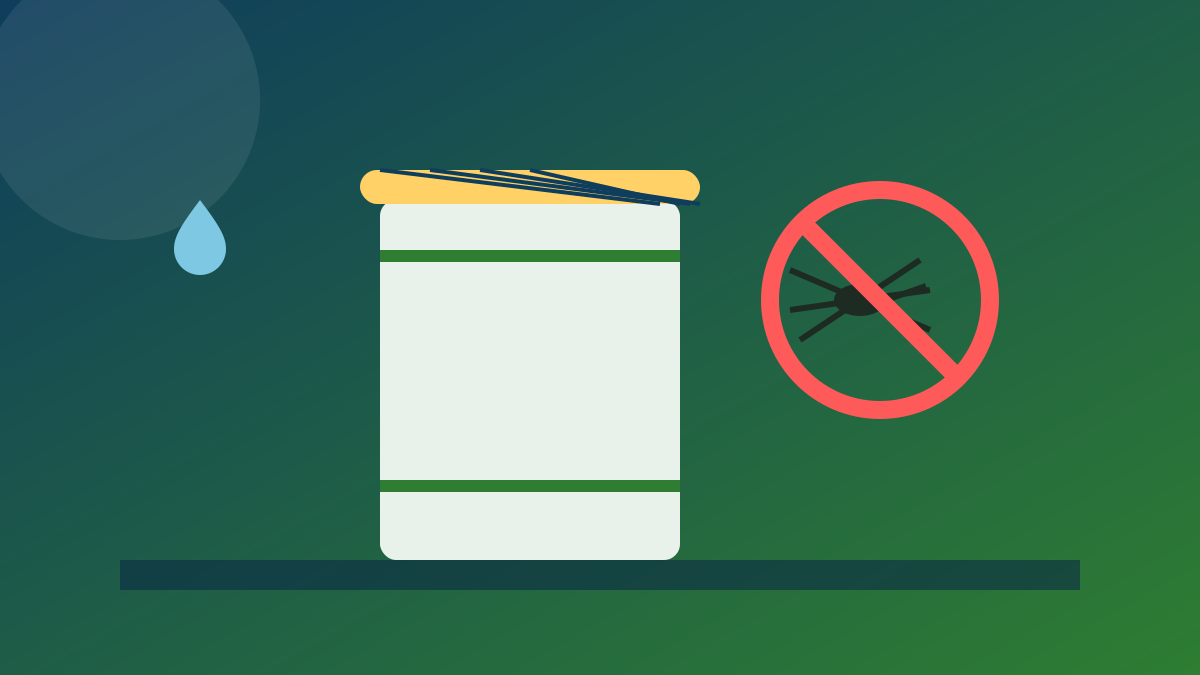
The most reliable way to keep mosquitoes out of a rain barrel is a fine mesh screen over every opening plus a tight-fitting lid that stays closed. Together they block adult mosquitoes from laying eggs in the water, and they work without chemicals, without cost, and without maintenance beyond a quick check after each storm. The other four methods below are backup layers for when a screen tears or a lid is left open.
Barrel water is for non-potable use only: ornamental beds, lawns, and outdoor cleaning. It is not drinking water, and mosquitoes are one more reason to keep the lid on and the water out of reach.
Why Barrels Breed Mosquitoes (and How Fast It Happens)
A rain barrel is close to perfect mosquito habitat: still water, shade, and organic matter from the roof. A female mosquito lays 100 to 200 eggs at a time on the water surface, and in warm weather those eggs hatch into larvae within one to two days. The larvae, sometimes called wrigglers, feed and grow for about a week, then become pupae and emerge as flying adults. In a hot summer, the whole cycle from egg to adult can take as little as seven to ten days. That means a barrel left open for one warm week can produce a new generation of mosquitoes, and a barrel that stays open all summer produces them continuously.
The larvae need still water to survive. They hang upside down from the surface and breathe through a tube, so moving water, a sealed surface, or a dry barrel all break the cycle. That is why the methods below work: each one either blocks the adults, disturbs the water, or removes the water. The fastest fix is always the screen, because it stops the cycle before the first egg is laid.
Method 1: Fine Mesh Screen on Every Opening
Fine mesh screen is the single most important defence. Cover the inlet where water enters from the downspout, the lid opening, and any other gap, including the overflow outlet if it is wide enough for a mosquito to enter. Use a mesh fine enough to stop a mosquito — window screen material works well — and fasten it so there are no gaps at the edges. A screen held on with a rubber band or a loose hose clamp will not do; mosquitoes find the gap.
Check the screen after every storm, because heavy rain and debris can tear it, and a torn screen is the same as no screen. Replace a damaged screen at once, and keep a spare piece of mesh and a spare clamp with your garden tools so the fix takes two minutes. If your barrel came with a built-in screen, check that too: factory screens clog with leaves and tear at the corners, and a clogged screen sends water over the top of the barrel instead of into it. A clean, tight screen is the cheapest mosquito control there is.
Method 2: A Tight-Fitting Lid That Stays Closed
A lid that fits tightly and stays closed is the second layer, and it matters most when the screen fails. The lid should sit flat on the barrel with no gap, and it should be heavy enough or latched enough that wind cannot lift it. If your barrel has a removable lid, check the seal every time you open it to clean the barrel, and replace a warped or cracked lid rather than living with the gap.
The habit matters more than the lid. Every time you open the barrel — to check the water level, to clean it, to add a hose — close it again properly before you walk away. A lid left ajar for one warm afternoon is enough for mosquitoes to find it. Keep the spigot closed when you are not using it, and keep the overflow hose fitted, because an open overflow is an open door. If children use the garden, teach them the same rule: the barrel lid stays on.
Method 3: Bti Dunks — What They Are and How to Use Them
Bti dunks are small doughnut-shaped tablets containing Bacillus thuringiensis israelensis, a naturally occurring bacterium that kills mosquito larvae but is not a chemical insecticide in the usual sense. When a dunk sits in the water, the bacteria release a protein that is toxic to mosquito and blackfly larvae when they eat it, and harmless to people, pets, birds, and plants at the labelled dose. One dunk treats about 100 square feet of water surface for about 30 days, so a single dunk cut into quarters can treat a standard barrel for months.
To use one, drop a quarter of a dunk into the barrel and replace it every 30 days, or after the barrel has been emptied and refilled. Bti works only on larvae, not on adult mosquitoes, so it is a backup, not a replacement for a screen. It is the best option for a barrel that cannot be sealed perfectly, such as an open-top barrel used for dipping a watering can. Follow the label exactly, do not use more than the label says, and remember that barrel water is still not drinking water, with or without Bti. If you prefer no additives at all, skip this method and rely on the screen, the lid, and regular use.
Method 4: Keep the Water Moving (Overflow and Regular Use)
Mosquitoes need still water, so water that moves is water they cannot use. A barrel that is used regularly — emptied and refilled by rain every week or two — rarely breeds many mosquitoes, because the larvae do not get a full week of still water to grow. Use the barrel for watering ornamental beds, and let the rain refill it. In a wet month, the overflow also helps: water moving through the overflow keeps the surface disturbed, and a barrel that overflows regularly is a barrel that is not standing still.
The opposite is also true. A barrel that sits full and untouched for a month in summer is the worst case. If you go on holiday, either empty the barrel before you leave or make sure the screen and lid are perfect. If you have more storage than you use, consider linking a second barrel and using them in turn, so each one is emptied regularly. Moving water is not a substitute for a screen, but it is a useful extra layer, and it costs nothing.
Method 5: Empty, Scrub, and Restart When Larvae Appear
If you see wrigglers in the water, do not wait for them to grow up. Empty the barrel completely, scrub the inside walls with a stiff brush and clean water, and rinse it out. Larvae cling to the walls and the sludge at the bottom, so a simple tip-out is not enough: scrub the sides, the bottom, and the lid, and flush the spigot and overflow hose. Check the screen and lid for the gap that let the mosquitoes in, fix it, and only then refill the barrel.
Do this at least once a season even if you see no larvae, because a clean barrel smells better and the water is clearer for ornamental use. Never use harsh chemicals or bleach to clean a barrel that waters plants; a brush and a rinse are enough. After a restart, check the water after a few days: if larvae return within a week, the screen or lid still has a gap, and you need to find it before the next warm spell.
FAQ
How do I keep mosquitoes out of my rain barrel?
Cover every opening with fine mesh screen and keep a tight lid closed. Those two steps block egg-laying adults. Bti dunks, regular use, and a seasonal scrub are useful backup layers.
Can mosquitoes breed in a rain barrel with a lid?
Only if the lid has a gap, or the screen is torn, or an opening is left uncovered. A sealed barrel with a good screen and a tight lid does not breed mosquitoes.
Are Bti dunks safe for garden water?
Bti is a naturally occurring bacterium that targets mosquito larvae and is labelled safe for people, pets, and plants at the labelled dose. It does not make barrel water safe to drink — barrel water is for ornamental beds and lawns only.
How fast do mosquitoes breed in standing water?
Eggs hatch in one to two days in warm weather, and the full cycle from egg to adult can take as little as seven to ten days. That is why a weekly check matters in summer.

Leave a Reply